
Data Centers at the Forefront of the Technological Revolution
Infrastructure has always been crucial to prosperity and societal progress. Today is no exception: the digitalization of the economy is becoming the next industrial revolution, driven by the explosion of computing demand to enable the development of artificial intelligence, automation, data sovereignty, and security. Together, these trends are driving a dramatic increase in the need for Data Centers and other digital infrastructure.
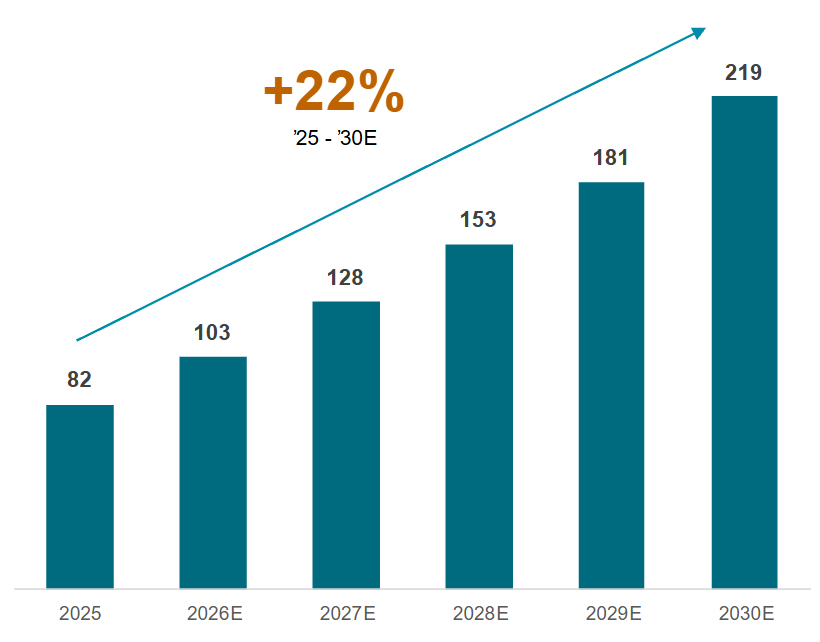
By 2030, Data Centers are expected to require $6.7 trillion[1] to keep pace with demand for computer power. Just the four largest US Tech companies (Amazon, Microsoft, Google, and Meta) are expected to increase AI-related capex in Data Center projects, supporting a capacity growth of +22% per annum from 2025 to 2030[2].
Behind this large investment, there are attractive opportunities to deploy capital for infrastructure investors through long-term leases with strong counterparties, offering different business models that range from small and convenient data centers located in towns to very large hyperscale models, offering different risk-return profiles.
Nevertheless, the development of Data Centers is facing some challenges associated with its investment dimension, requiring massive resources ranging from land and access to power 24/7, to water for refrigeration and massive amounts of raw materials such as steel, aluminum, etc.
Looking forward, the Data Center sector and all the required investments in adjacent infrastructure (mainly power supply) will have a very strong presence within global infrastructure investments for the next decade.
At AltamarCAM, we are strong believers in these trends, having made investments in the different subsegments under long-term cashflow conditions and strong downside protection.
- [1] Monitor Deloitte, CBRE, Public Company Filings.
- [2] McKinsey & Company (2025), Data center demand model.
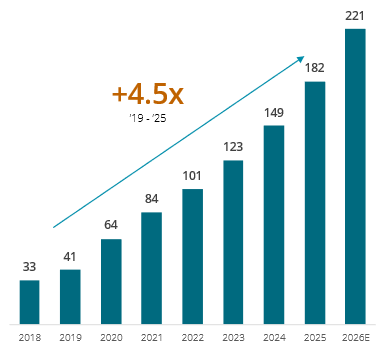
Global Data Consumption (ZBts)
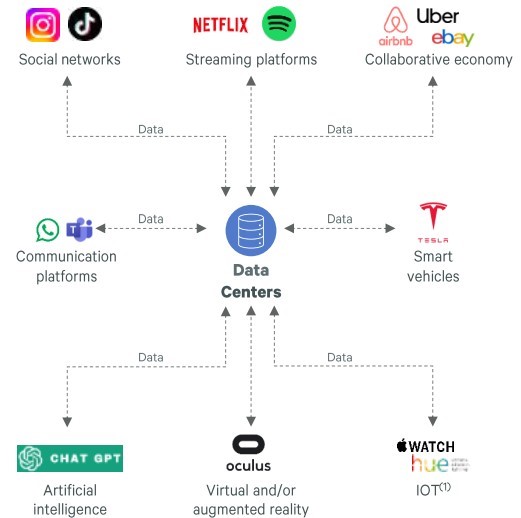
Interaction with Data Centers
Sources: Monitor Deloitte, CBRE, Public Company Filings
Global Data Center Demand Forecast (GW)
Source : Sources: McKinsey
References:
- [3] McKinsey & Company. (2025). Data center demand model
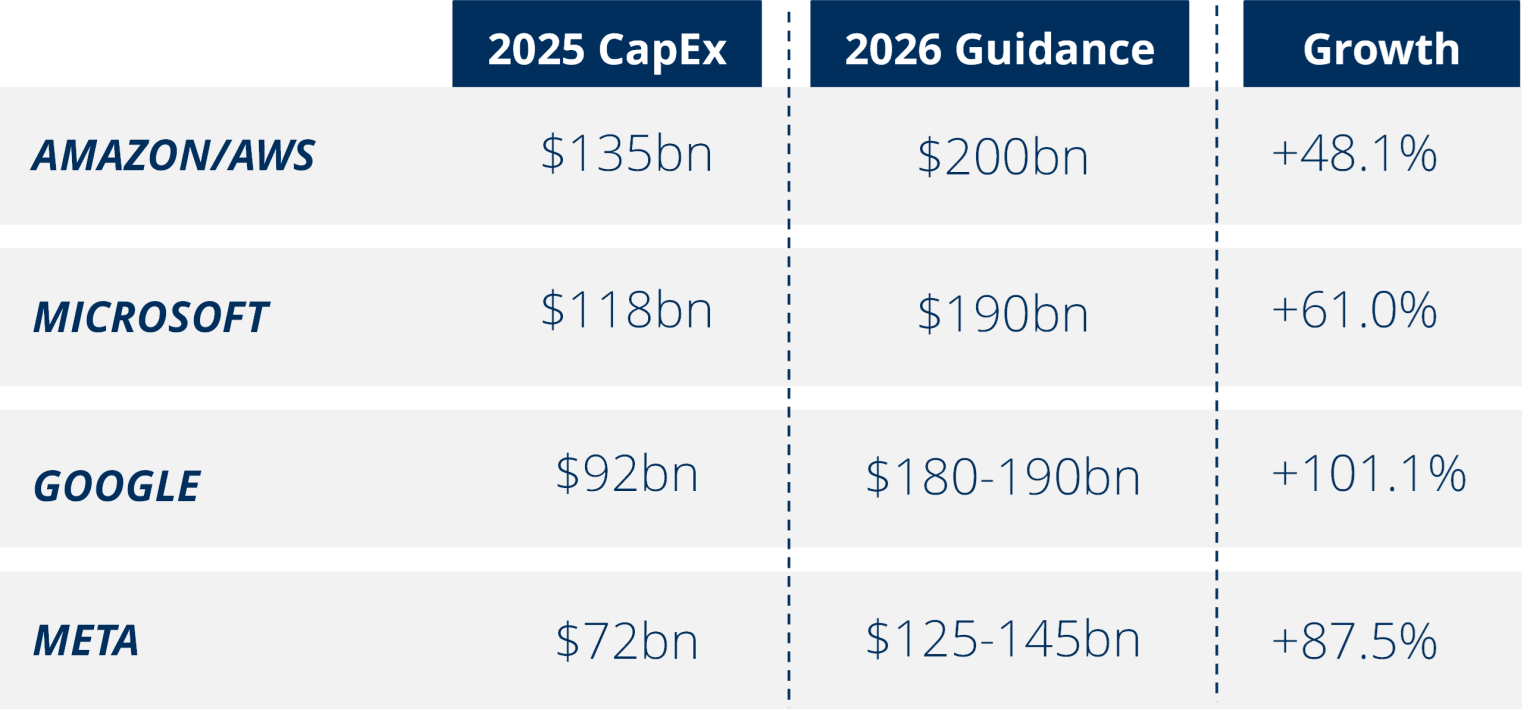
Source: Companies Data
There are different types of Data Centers depending on the kind of data processing that it is going to be used for, as well as the customer needs in terms of dimension and flexibility.
As summarized below, the different types offer long-term contracts with strong counterparties to attract investors. Data Centers are not only used for artificial intelligence related processes, but also to host and keep safe Cloud Services, critical information related to all of us. It is also used to have computing capacity to run processes within each company. Hence, they are critical infrastructure for the end customers, to run their own businesses. Depending on the type of usage, the contracted profile differs, although in most cases it offers long-term contracts providing long term, stable cash flow visibility.
Different Data Center Models
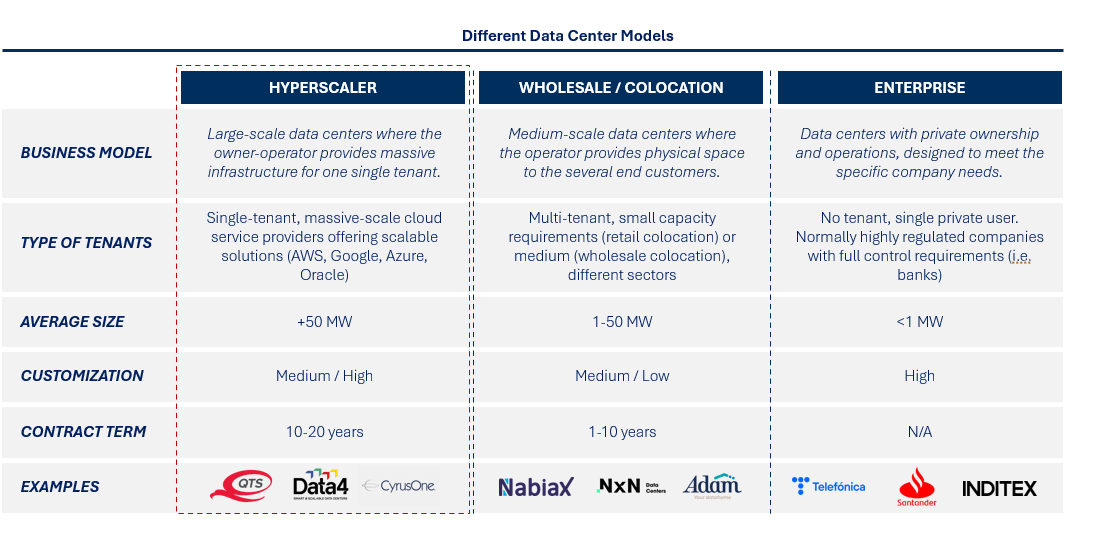
Source: AltamarCAM Research
The expected growth of Data Centers implies a great investment opportunity for infrastructure investors but is not exempt from various challenges that need to be solved to enable this trend and ensure positive returns. Amongst others, the main challenges that need to be converted into opportunities are:
- Securing power and grid connection: Considering the amount of power that these facilities require, it is critical to locate the Data Center in a place with dispatchable power. This represents an investment opportunity for Power companies to provide dedicated power solutions when grid connection and/or access to power grid is not available.
- Land Access: Location of the data center, depending on the usage of the facility, is key for the customer. These facilities require significant surfaces of land, in some cases close to data consumptions hubs. Being agile in the permitting of the land is key to matching the demand timings.
- Access to stable energy prices: Having access to stable pricing of energy is essential given that power is amongst the largest expenses when operating a Data Center.
- Fiber and Telecom Grid connections: Having full speed fiber connectivity is crucial to providing a good service when referring to latency and speed of response. Fiber providers have a large opportunity to provide end to end connectivity infrastructure.
- Construction materials supply and construction cost predictability: Guaranteed supply of key components of Data Centers such as metals, rare earth and other elements with predictable prices and timings is key to meeting development timelines.
At AltamarCAM, we believe there are strong fundamentals to support this investment theme, and we have invested in different segments within the sector. This includes several Data Center providers in the Colocation and Hyperscale markets in USA and Europe, as well as several power supply companies partly focused on providing distributed energy to Data Centers in the major markets.
A sector that drives the next industrial revolution
Data Centers are among the investment themes that are going to drive global economic growth over the next decade. The number of resources and related sectors that need to be mobilized represent a very compelling opportunity to generate long-terms stable returns. Nevertheless, the challenges that the sector faces are significant and must be carefully assessed and mitigated to generate a reasonable investment risk return profile.
IMPORTANT NOTICE:
This document contains information subject to change regarding Altamar CAM Partners, S.L., Altamar Private Equity, SGIIC SAU, CAM Alternatives GmbH and their subsidiary and affiliated companies (collectively referred to as “AltamarCAM”), as well as other funds and vehicles actively managed or advised by AltamarCAM (the “Funds”). It has been prepared for informational and illustrative purposes, as a general market commentary, and is provided for the exclusive use of its intended recipient. If you did not receive this document directly from AltamarCAM, you should not read, use, copy, or share it.
The information contained in this document reflects, as of the date of publication, AltamarCAM’s views, which may change at any time without prior notice. AltamarCAM is under no obligation to update it or to provide any potential updates.
This document is based on sources considered reliable and has been prepared with the utmost care to avoid being unclear, ambiguous, or misleading. However, no representation or warranty is made regarding its truthfulness, accuracy, or completeness, and it should not be regarded as such. AltamarCAM assumes no responsibility for the information contained in this document.
This document may contain projections, expectations, estimates, opinions, or subjective judgments, all of which must be interpreted as such and never as a statement or guarantee of present or future results, performance, or returns. To the extent that this document contains statements about future performance, such statements are forward‑looking and subject to a number of risks and uncertainties. Past performance is not necessarily indicative of future results, as current economic conditions are not comparable to those that existed previously and may not repeat in the future. There is no guarantee that the Funds will achieve results comparable to previous funds. Nor are there guarantees regarding specific returns, asset diversification, the materialization of assumptions (regarding the market, its stability, its risks, or any other matter), or the fulfillment of any particular strategy, approach, or investment objective. All of the foregoing will depend, among other factors, on the operating performance of the Funds’ portfolio companies, asset values and market conditions at the time of sale, transaction-related costs, and the timing and method of exit—all of which may differ from the assumptions used in the data contained herein. Consequently, returns are not guaranteed: product values are subject to market fluctuations, these forecasts do not represent a reliable indicator of future results, and such returns may be zero or even negative. Investors should bear in mind that any returns generated are subject to taxation, which will depend on each investor’s individual circumstances and may change in the future.
This document is solely a general market commentary and should not be interpreted as regulated advice, an investment offer, a solicitation, or a recommendation. Alternative investments may be highly illiquid, speculative, and may not be suitable for all investors. Investment in alternative assets is intended only for experienced and sophisticated investors who are willing to assume the significant economic risks associated with such investments. Prospective investors in any alternative investment should consult the specific legal documentation of the relevant vehicle, where they will find the specific risks and considerations associated with that particular alternative investment. Investors should carefully review and consider potential risks before investing. No person or entity receiving this document should make an investment decision without obtaining prior and individualized legal, tax, and financial advice.
Neither AltamarCAM nor any of its group companies, nor their respective shareholders, directors, managers, employees, or advisors assume any responsibility for the integrity or accuracy of the information contained herein, nor for any decisions made by recipients of this document based on it or on the information it contains.
This document is strictly confidential and may not be reproduced or disclosed in any manner, in whole or in part, without the prior written consent of AltamarCAM.